

 (3240 x 1440 px) (5).png)
LEGAL JOURNAL 5th edition
🗣️ “ *I’m just recording… for evidence.* ”
In tense situations at hospitals, many people react by:
👉 Recording doctors or nurses
👉 Posting their faces and workplace online
👉 Sharing their own version of the story
It may feel like you’re “ *seeking justice* ”
But… you could actually be breaking the law.
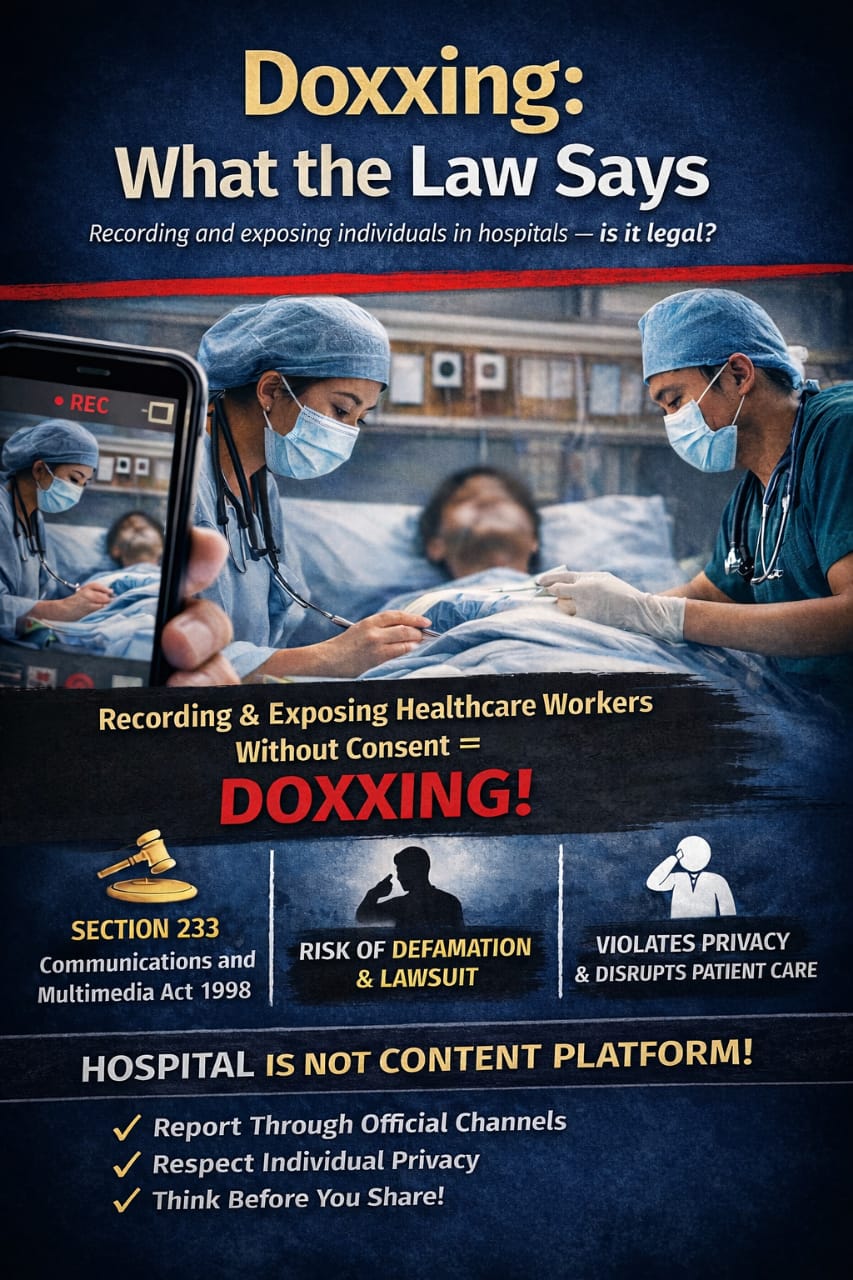
📌 This can amount to *DOXXING* —
where someone’s identity or personal information is shared without consent.
⚖️ From a legal perspective:
➡️ Recording and sharing such content may be investigated under Communications and Multimedia Act 1998 (Section 233) if it is offensive, harmful, or affects another person’s reputation
➡️ If unverified accusations are included → it may lead to defamation claims
➡️ Yes — even if you only clicked “share”, you may still be held responsible
❗ Important to remember:
*Hospitals are places for treatment — not for content.*
Recording and exposing individuals can:
✅ Disrupt patient care
✅Violate the privacy of other patients
✅Put undue pressure on healthcare workers
🗣️ “ *If it doesn’t go viral, no action will be taken*”
There are proper channels in place.
What you should do instead:
✅ Lodge a complaint through the hospital’s official channels
✅ Report to related Ministry or Royal Malaysia Police if necessary
✅ Avoid sharing anyone’s identity without proper justification
💬 In the pursuit of justice,
don’t cross the line into violating someone else’s rights.